


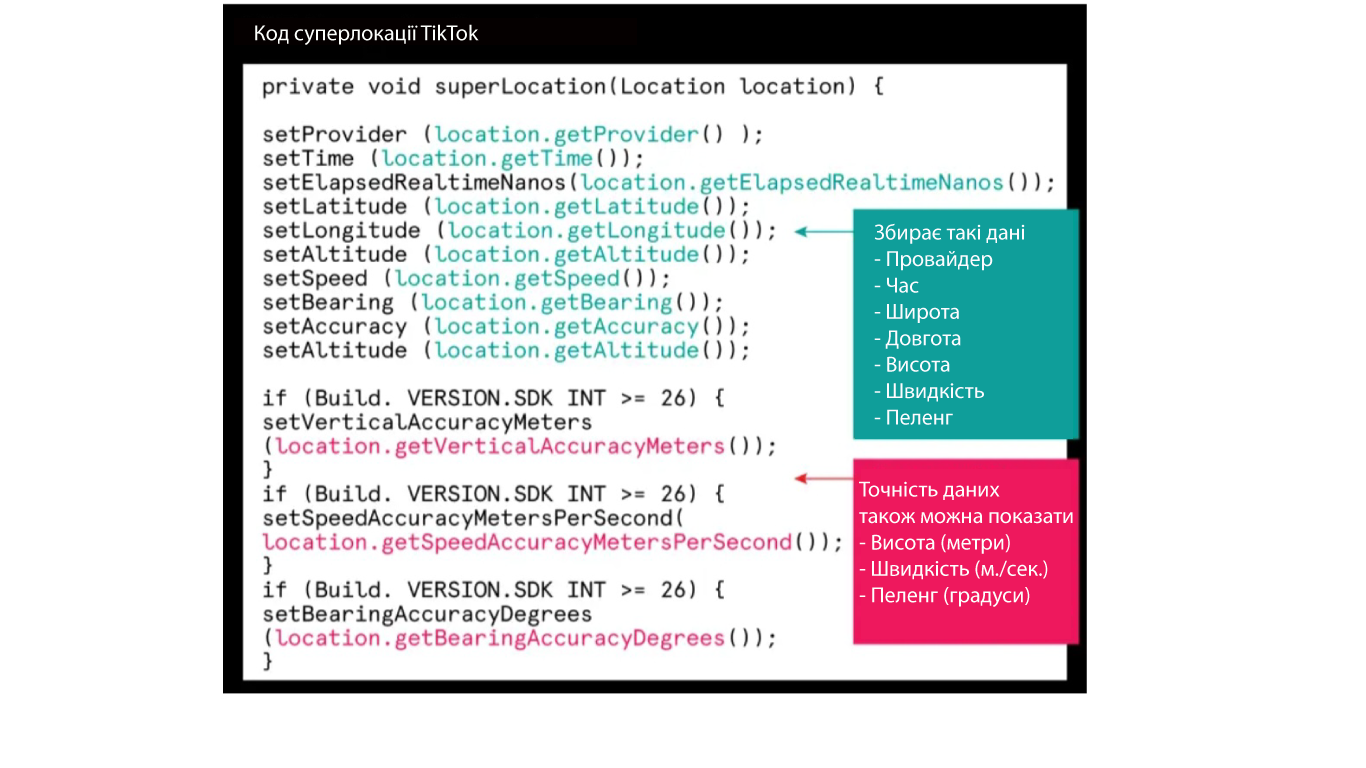
In recent years, governments in the United States, European countries, and Canada have been actively working to restrict access to TikTok over concerns about potential security threats. TikTok is a short-form video app owned by the Chinese company ByteDance. Lawmakers and regulators in the West have expressed concern that the company may hand over users’ sensitive data, including location information, to the Chinese government. This is possible due to laws that allow China to secretly demand data from Chinese companies and citizens for intelligence-gathering operations. Lawmakers are also concerned that China could use TikTok’s content recommendations to spread disinformation.
Users have discovered that even with location access disabled, TikTok still offers to add a location to their posts. In addition, even when finding friends through other social networks is turned off, TikTok somehow recommends people users are likely to know. Users also frequently notice that after simply mentioning something near their phone, their recommendations the next day are filled with content related to that word.
Forbes journalist John Koetsier aptly called TikTok “digital crack cocaine for your brain.” Most articles, including Koetsier’s, argue that TikTok reduces users’ attention spans. Citing research findings, The Independent notes that most users experience a shorter attention span after prolonged use of the app, pointing to how easy and quick it is to consume entertainment content.
In its privacy policy, TikTok openly describes all the metadata it collects from users of its platform.
The first thing that should alert you as a user is the permission for full collection and processing of information. In addition to the information you provide when creating an account, TikTok collects technical and personal information about you when you download the app and interact with the platform, even without creating an account.
Who Does TikTok Share Your Personal Data With?
Your data is shared with cloud storage providers, business partners, other companies within the TikTok group, content moderation services, advertising measurement services, advertisers, and analytics providers. Where required by law, TikTok provides information to law enforcement and other government authorities, as well as to third parties on the basis of legally binding documents.
How Long Does TikTok Keep Your Information?
TikTok retains your information for as long as necessary to provide its services. However, if the information is not needed to provide services, the platform keeps it for as long as it has a legal basis to do so, particularly when it is required to retain it by law. Your data is also retained if TikTok believes it is or will be needed to establish, exercise, or defend legal claims.
After you stop using the platform, TikTok continues to store your information in aggregated and anonymized form.
Types of Personal Data TikTok Collects
Profile information. You provide information about yourself when registering on the platform, including your username, password, date of birth, email address, phone number, information you add to your profile, as well as your photos and videos.
Messages. TikTok collects information you provide when composing, sending, or receiving messages through the platform’s messaging features. This includes messages you send or receive via the chat function. This information covers the content of the message and data about it, such as when it was sent, received, or read, as well as information about the participants in the conversation.
Payment information. When you make a payment on or through the platform, including when you buy TikTok coins or purchase products using built-in features, TikTok collects information about the purchase or payment transaction, namely: payment card details, billing information, delivery and contact details, and information about the items you purchased.
Automatically Collected Information
Technical information. TikTok collects information about the device you use to access the platform, including your IP address, user agent, mobile carrier, time zone settings, advertising identifiers, device model, device system, network type, device identifiers, screen resolution and operating system, app and file names and types, keystroke patterns or rhythms, battery state, audio settings, and connected audio devices. When you log in from multiple devices, TikTok may use your profile information to identify your activity across devices. TikTok may also associate you with information collected from devices other than those you use to log in to the platform.
Location information. TikTok receives information about your approximate location, including based on your SIM card and/or IP address. With your permission, TikTok also collects precise location data (such as GPS).
Image and audio information. TikTok collects information about the videos, images, and audio that are part of your user content, including identifying objects and scenery, the presence and location of facial and body features and attributes within an image, the nature of the audio, and the text of words spoken in your user content.
Cookies. TikTok uses cookies and similar technologies (such as web beacons, flash cookies, etc.) (“cookies”) to automatically collect information, measure, and analyze. Web beacons are very small images or small pieces of data embedded in images, also known as “pixel tags” or “clear GIFs,” that can recognize cookies, the time and date a page was viewed, a description of the page where the pixel tag is placed, and similar information from your computer or device.
Content Moderation
The app has been found to have content moderation problems. Many videos containing profanity were published with music tracks. In addition, there have been recorded attempts by pedophiles to contact children, suicidal acts on camera, and overly explicit videos. TikTok has already been banned in some countries for spreading political disinformation aimed at destabilizing governments.
Despite the fast and efficient performance of the video platform and the many in-app video editing features, all of these factors lead to one conclusion: TikTok not only manipulates people and their moods through its recommendation system, but also collects a vast amount of information about its users.
TikTok’s servers and headquarters are located in China, where all uploaded information is stored. The company has no official representative office in Ukraine, so most likely all information about Ukrainian users is stored on Chinese servers.
Why This Is Dangerous
Under Chinese law requiring full disclosure of business activities and stored data, government authorities can request complete access to the information collected about TikTok users. A careful review of the app’s privacy policy reveals that TikTok provides information to law enforcement and other government authorities, as well as to third parties on the basis of legally binding documents. On this basis, we can assume that countries where TikTok has an official representative office can request information about Ukrainian users. With a representative office in russia, TikTok may lawfully transfer your data to the aggressor. By registering in the app, you agreed to the privacy policy, which states that you will have no claims and consent to the collection and processing of the data listed above.
In summary, TikTok may pose a danger not only to your confidential data, but also to your mental health and your overall perception of the information space.
To protect your privacy on TikTok, you can use the same methods as for other social networks. For example, do not allow the app to access your location and contacts.
We also recommend watching TikTok videos without logging into an account. This approach helps you avoid most of the risks associated with the platform.
Whether to use TikTok is a personal choice, just as it is with any other app. We advise you to carefully read all the terms you accept and agree to during installation, as the security of your data may depend on it.